Dental Implants vs Dentures: Choosing the Right Tooth Replacement Option

Introduction

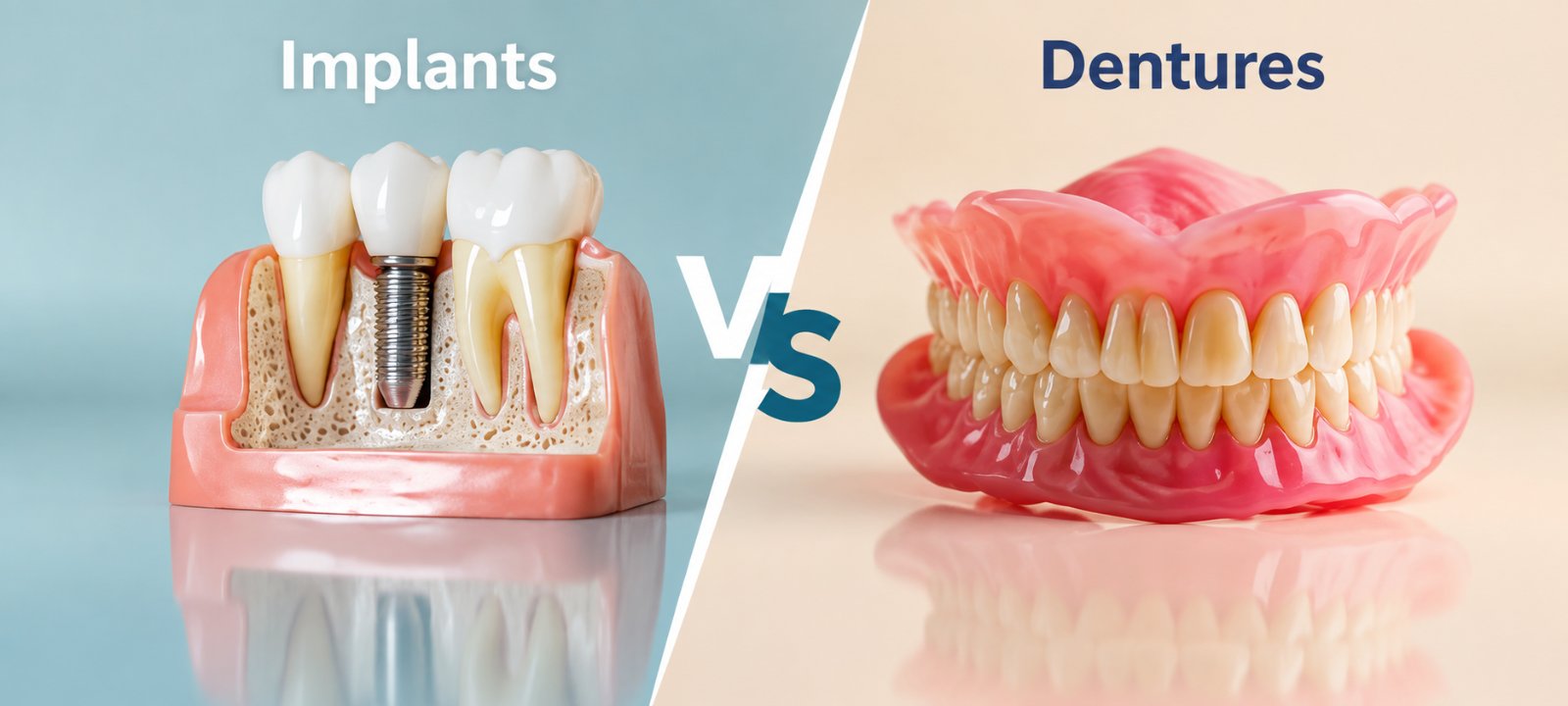
Many people face the choice between dental implants vs dentures when looking for tooth replacement options. Both choices help restore your smile and improve chewing. However, they work in different ways. If you are missing teeth, you may wonder which is the best option for missing teeth. Understanding the differences can help you make an informed decision. In this guide, we will explain the pros, cons, costs, and care tips for both dental implants and dentures.

What Are Dental Implants?

Dental implants are small metal posts, usually made of titanium. Dentists place them into your jawbone where teeth are missing. Over time, the bone grows around the implant. This process is called osseointegration. After healing, a dentist adds a crown, which looks like a real tooth. Because implants are fixed in place, they do not move when you eat or talk. Many people choose dental implants for their natural look and feel.

What Are Dentures?

Dentures are removable devices that replace missing teeth. They can replace a few teeth or all teeth in the mouth. Full dentures cover the whole upper or lower jaw. Partial dentures fill gaps when some natural teeth remain. Dentures rest on the gums and are made from acrylic or metal. Since dentures are not fixed, you can take them out for cleaning or sleeping. Many people use dentures as a simple and affordable tooth replacement option.

Key Differences Between Dental Implants and Dentures

While both options replace missing teeth, they have key differences. For example, dental implants are permanent, while dentures are removable. Implants need surgery, but dentures do not. Here are some main differences:

  • Placement: Implants are fixed in the jawbone. Dentures rest on the gums.
  • Stability: Implants do not slip. Dentures may shift when eating or talking.
  • Care: Implants are brushed like natural teeth. Dentures need special cleaning.
  • Longevity: Implants can last many years. Dentures may need replacement every 5–8 years.
  • Cost: Implants usually cost more upfront. Dentures are often less expensive.
  • Pros and Cons of Dental Implants

    Dental implants offer many benefits, but they also have some drawbacks. For instance, they look and feel like real teeth. However, the process involves surgery and can take months. Consider these points:

  • Pros:
  • Natural look and feel
  • Do not slip or move
  • Help keep jawbone healthy
  • Easy to care for
  • Can last a lifetime with good care
  • Cons:
  • Higher cost than dentures
  • Requires surgery and healing time
  • Not everyone is a candidate (needs enough bone)
  • Possible risks like infection or implant failure (rare)
  • Pros and Cons of Dentures

    Dentures are a popular tooth replacement option for many people. Still, they have both advantages and disadvantages. For example, dentures are less costly, but they may not fit as securely as implants. Here are some pros and cons:

  • Pros:
  • Lower cost than implants
  • No surgery needed
  • Quick to make and fit
  • Can replace several or all teeth
  • Easy to adjust or remake
  • Cons:
  • May slip or move in the mouth
  • Can cause sore spots on gums
  • Need to be removed for cleaning
  • May affect taste or speech
  • Usually need replacement every few years
  • Factors to Consider When Choosing Between Dental Implants and Dentures

    Choosing the best option for missing teeth depends on several factors. For instance, your budget, health, and lifestyle all play a role. Here are some things to think about:

  • Cost: The cost of dental implants vs dentures can vary. Implants cost more at first, but may last longer. Dentures are less expensive, but may need replacement.
  • Durability: Implants are more durable and can last many years. Dentures may wear out faster.
  • Comfort: Implants feel more like real teeth. Dentures may cause discomfort for some people.
  • Oral Health: Good bone and gum health are needed for implants. Dentures may be better if you have weak gums or bone loss.
  • Lifestyle: If you want a fixed solution, implants are best. If you prefer something removable, dentures may suit you.
  • Additionally, your dentist can help you decide based on your needs and health.

    How to Care for Dental Implants and Dentures

    Proper care helps both dental implants and dentures last longer. For example, brushing and regular dental visits are important. Here are some care tips:

  • Dental Implants:
  • Brush twice a day with a soft toothbrush
  • Floss daily around the implant
  • Visit your dentist for regular check-ups
  • Avoid hard or sticky foods that can damage the crown
  • Dentures:
  • Remove dentures at night
  • Clean dentures daily with a denture brush and cleaner
  • Soak dentures in water or a cleaning solution overnight
  • Brush your gums and tongue to keep your mouth healthy
  • See your dentist if dentures feel loose or cause pain
  • Frequently Asked Questions About Tooth Replacement Options

    People often have questions about dental implants, dentures, and other tooth replacement options. Here are answers to some common questions:

  • Are dental implants safe? Yes, dental implants are safe for most people. The American Dental Association and CDC support their use. However, some health conditions may affect healing.
  • How long do dental implants last? With good care, implants can last many years, often a lifetime.
  • Do dentures look natural? Modern dentures look much more natural than in the past. Still, dental implants may look and feel more like real teeth.
  • What is the cost of dental implants vs dentures? Implants cost more upfront, but may last longer. Dentures are less expensive but may need to be replaced more often. Costs can also vary by location, such as dental implants in New York or other cities.
  • Can I eat normally with implants or dentures? With implants, you can eat most foods. Dentures may require some changes in your diet, especially at first.
  • Which is the best option for missing teeth? The best choice depends on your needs, health, and budget. Your dentist can help you decide.
  • Restore your smile with the right tooth replacement option. Consult OrthoRoot Multispecialty Dental Clinic today.